If the problem isn’t clearly defined, the solution is guesswork. Stop treating symptoms & fix the drivers that cause issues to repeat quarter after quarter.
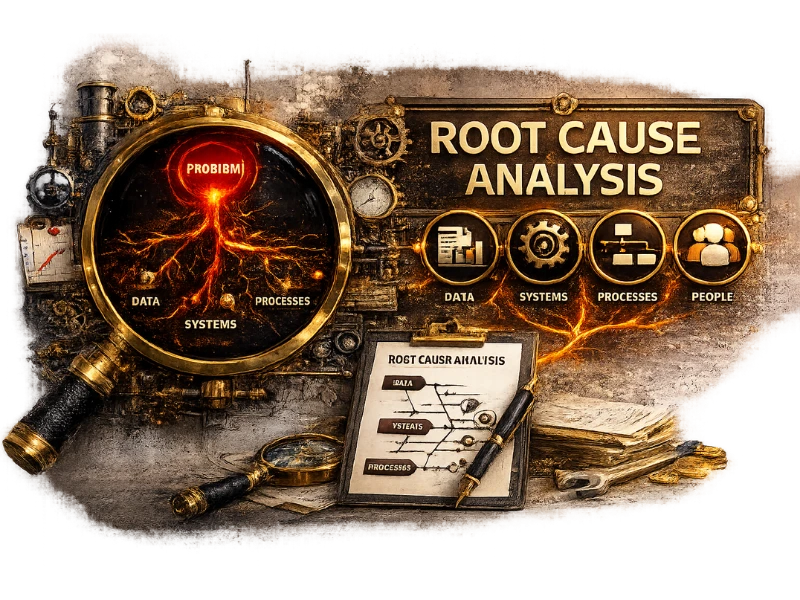
We utilize structured techniques including the 5 Whys, Issue Trees and Fishbone diagrams to separate facts from assumptions.
Most organizations rush past problem definition because they are already certain they know what the problem is. This certainty is usually based on the most visible symptom, not the underlying cause. A well-constructed problem statement must be factual (not opinion-based), measurable (expressed in quantifiable terms), bounded (with a clear scope of what is and is not included), and stakeholder-aligned (meaning the people closest to the work agree it reflects reality).
The 5 Whys is a powerful tool when used correctly, but it’s frequently misapplied. Teams often stop at the first plausible answer rather than the true root cause, and they confuse ‘why did this happen‘ with ‘who failed.’ InsightSolve facilitates 5 Whys sessions using a structured template that enforces evidence requirements at each level, ensuring the final root cause is supported by data rather than assumption.
The Sustain phase is where most RCA engagements fail. A solution without an owner, a review cadence, and a leading indicator is not a sustained solution, it’s a temporary fix. InsightSolve embeds three specific mechanisms into every Sustain deliverable: a named process owner, a 30/60/90-day check-in schedule, and a single leading metric that predicts whether the problem is re-emerging before it becomes visible to the customer.
of quality failures are caused by systemic/process issues, not individual error (Juran Institute)
average cost of fixing a problem after it recurs vs. solving it correctly the first time
of operational decisions are made without structured root cause analysis (McKinsey Ops Survey)
of customer complaints trace to the same 3-5 process failure points
typical timeline to complete a structured RCA engagement
of organizations report the same problem recurring within 12 months of an initial fix
This service is for organizations that are experiencing recurring problems that are impacting the client experience, revenue, process efficiency, organizational health and more.
Establish measurable, factual problem statements aligned with stakeholders, rooted in a facts.
Drill down into the root causes using data trend analysis, stakeholder/employee feedback and customer insights.
Design or identify targeted solutions and assess them using an Impact vs. Effort matrix.
Embed new standards into daily operations to ensure the problem never returns.
Once root causes are identified, organizations face a prioritization problem: which solution to implement first. The Impact vs. Effort Matrix plots each proposed solution on two axes – the magnitude of impact on the problem, and the organizational effort required to implement it. Solutions in the high-impact, low-effort quadrant are immediate priorities. This tool prevents organizations from defaulting to the most visible solution, or the one championed by the most senior person in the room.
Internal post-mortems are valuable but have a structural limitation: the people conducting the analysis are often the same people closest to the problem, which introduces confirmation bias. InsightSolve provides structured facilitation and an external perspective that surfaces root causes internal teams often overlook, not because they lack capability, but because proximity to a problem creates blind spots.
Root cause analysis applies wherever recurring problems exist – operational, financial, cultural, or strategic. Common engagements include recurring revenue leakage, persistent team performance gaps, repeated client escalations, and strategy execution failures where the plan is sound, but implementation breaks down consistently.
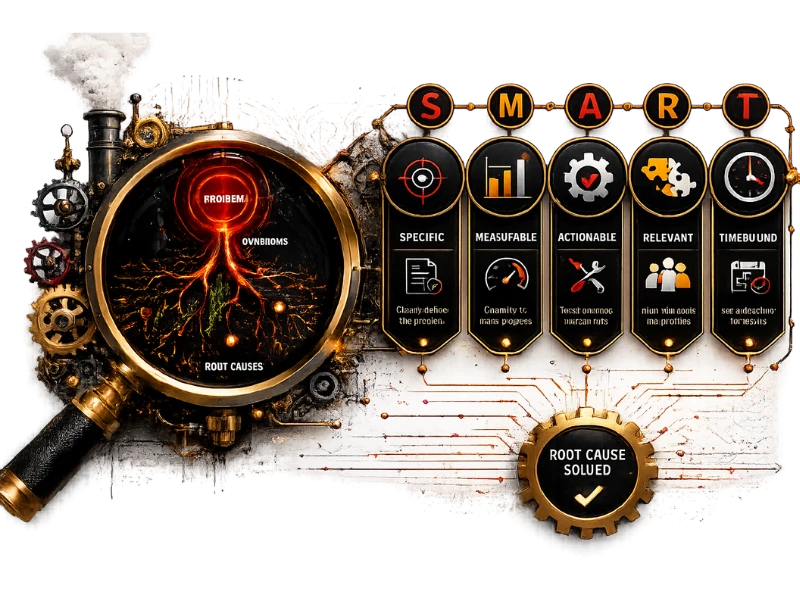
Every solution is validated against the SMART framework: Specific, Measurable, Actionable, Relevant, and Time-bound – before it leaves the analysis phase. This means every recommended action exits the engagement with a named owner, a defined success metric, and a direct line back to the confirmed root cause.
What you will walk away with:
Our goal is simple:
Help you uncover where improvements can create meaningful results and give you practical guidance on next steps, even if we don’t work together afterward.